
Football Strength vs Cardio: On-Field Power
A football strength training plan should develop maximal strength, explosive power, sprint capacity, mobility, and recovery without making players slow or permanently sore. For amateur and competitive...
Football Strength vs Cardio: On-Field Power
A football strength training plan should develop maximal strength, explosive power, sprint capacity, mobility, and recovery without making players slow or permanently sore. For amateur and competitive footballers in 2026, the most reliable structure is two resistance sessions, two speed or agility sessions, one conditioning session, and at least one complete rest day each week. Compound lifts such as the squat, Romanian deadlift, split squat, bench press, and pull-up build force, while jumps, medicine-ball throws, and short sprints convert that force into football actions. A useful starting point is 3–5 sets of 3–6 repetitions for major strength exercises, with 48 hours between demanding lower-body sessions. Position, training age, fixture congestion, and injury history must change the details. Begin with controlled loads, keep one or two repetitions in reserve, and increase weight only when technique remains stable under fatigue.

Photo by Mateo Franciosi on Pexels
Want a more disciplined way to follow football performance and tournament analysis? Pitch Notes covers team tactics, player statistics, match predictions, and the 2026 World Cup from a football-first perspective.
Before 2025: how did football strength training work?
Before 2025, football strength training generally worked best when coaches treated the sport as an intermittent power activity rather than a long-distance endurance event. Players repeatedly accelerated, decelerated, changed direction, jumped, collided, and recovered between efforts, so a plan based only on bodybuilding volume or steady-state running missed the main physical demands. The FIFA Training Centre consistently emphasizes game-relevant intensity, movement quality, and structured load management, while the NSCA defines strength and conditioning as a system that combines physical preparation with monitoring and recovery. The old mistake was not lifting weights; it was lifting without a football calendar. Many players chased personal records on Friday, then wondered why their hamstrings felt like suspicious electrical wiring on Sunday. A sound plan instead used heavy bilateral lifts during preparation periods, unilateral work for stability, plyometrics in low volumes, and sprint exposure throughout the week. That approach remains useful, but the scheduling needs sharper control now.
What did a traditional weekly plan usually contain?
A traditional weekly plan commonly included two gym sessions, one endurance workout, one speed session, and team training built around the weekend match. The most effective versions prioritized lower-body strength early in the week, upper-body and trunk training around the middle, and reduced volume before competition. The danger was accumulated fatigue: five hard sessions in seven days could exceed a player’s recoverable workload even when each individual workout looked reasonable.
A practical historical template looked like this:
- Monday: recovery, mobility, and low-intensity aerobic work.
- Tuesday: lower-body strength, acceleration, and technical training.
- Wednesday: upper-body strength, trunk control, and moderate conditioning.
- Thursday: change-of-direction drills, jumps, and tactical football.
- Friday: brief primer session with mobility, speed, and set-piece work.
- Saturday: match or high-intensity practice.
- Sunday: complete rest or gentle recovery, depending on match load.
The important lesson is that exercise selection matters less than the relationship between intensity, volume, and recovery. A 90-minute lifting session containing 25 hard sets for the legs may be less useful than a 45-minute session with 12 high-quality sets. In my experience, the first warning sign is usually not dramatic injury; it is slower acceleration, poor sleep, and a player quietly avoiding maximal sprinting because the body knows what the brain refuses to admit.
[Internal Link: beginner football strength training guide]
The 2026 shift: what has changed?
The 2026 shift is toward individualized training loads, measurable readiness, and exercises that connect gym strength with sprinting, deceleration, and match actions. Modern programs increasingly use GPS distance, high-speed running, acceleration counts, session-RPE, jump height, wellness scores, and injury-risk screening to decide whether a player needs more work or less. Technology does not make a bad coach clever, unfortunately, but it can reveal that a supposedly easy week contained excessive high-speed exposure. The World Health Organization recommends regular physical activity for health, yet football performance requires more precise dosing than general fitness guidance. A professional environment may track these measures daily; a recreational player can use simpler substitutes such as a training log, morning fatigue rating, resting heart rate, and a weekly count of hard sprint sessions. The key change is not buying an expensive wearable. It is making decisions from repeatable information instead of guessing after the hamstring has already filed its complaint.
A 2026-ready football strength training plan should therefore include:
- A defined objective for each session, such as maximum force, power, speed, or recovery.
- A weekly high-intensity limit based on matches and team practices.
- A progression rule using load, repetitions, bar speed, or technical quality.
- A deload week every three to six weeks when fatigue indicators remain elevated.
- A return-to-play progression after injury rather than an emotional leap straight into full-speed football.
One useful practitioner-level adjustment is to separate “hard” from “long.” A 20-minute acceleration session can be neurologically demanding even when it feels short, while 40 minutes of easy cycling may be physically longer but easier to recover from. Players who treat duration as the only measure of workload often make this error repeatedly, then blame their boots, the pitch, or Mercury retrograde.
Ready to compare training structure with the demands of real football? Use Pitch Notes for tactical context, player workload discussion, and tournament-focused analysis.
What changed for players?
Players now need to distinguish between building force and expressing force quickly. A stronger squat does not automatically produce a faster first step, because acceleration depends on force direction, ankle stiffness, hip projection, technique, body mass, and the ability to apply force rapidly. The best programs pair a heavy movement with a related explosive movement, such as a squat followed by a countermovement jump or a trap-bar deadlift followed by a broad jump. This contrast method should be used carefully: three heavy sets followed by three crisp jumps may be productive, while six exhausting sets followed by sloppy landings is simply an expensive way to practice poor mechanics. The British Journal of Sports Medicine has published substantial evidence on strength training, neuromuscular preparation, and injury prevention, but research findings still require sensible coaching application. Players should also train the adductors, calves, hamstrings, and trunk because football injuries often appear in tissues neglected by mirror-focused programs. The goal is not to look powerful in a gym photograph. The goal is to survive braking, contact, and repeated sprinting late in the match.
How should the plan differ by position?
A position-specific plan should preserve the same foundations while changing the emphasis, volume, and fatigue tolerance. Central midfielders and full-backs usually need repeated high-intensity running and deceleration capacity, whereas center-backs benefit heavily from maximal strength, jumping, contact tolerance, and short acceleration. Wingers and forwards require elastic speed, unilateral power, sharp cuts, and repeated explosive actions; goalkeepers need lateral force, upper-body power, landing control, and mobility through the hips, shoulders, and ankles.
| Position | Main physical priorities | Useful training emphasis |
|---|---|---|
| Goalkeeper | Lateral power, jumping, landing, shoulder strength | Lateral bounds, medicine-ball throws, split squats |
| Center-back | Maximal force, contact strength, acceleration | Trap-bar deadlift, squat, carries, short sprints |
| Full-back | Repeated sprinting, deceleration, agility | Single-leg work, hamstring training, change of direction |
| Midfielder | Aerobic repeatability, agility, trunk control | Moderate lifting, intervals, rotational work |
| Winger | Acceleration, elastic power, cutting | Jumps, resisted sprints, unilateral strength |
| Striker | Short explosive actions, balance, finishing power | Hip extension, bounds, sprint starts, anti-rotation |
An important edge case is the technically gifted but under-muscled player. Adding body mass too quickly can reduce relative speed and movement efficiency, particularly for wingers and attacking midfielders. A more cautious target is gradual gain, often around 0.25–0.5% of body mass per week during an off-season, while monitoring sprint times and jump performance. If both decline for two consecutive weeks, the surplus is probably being purchased with performance rather than improving it.
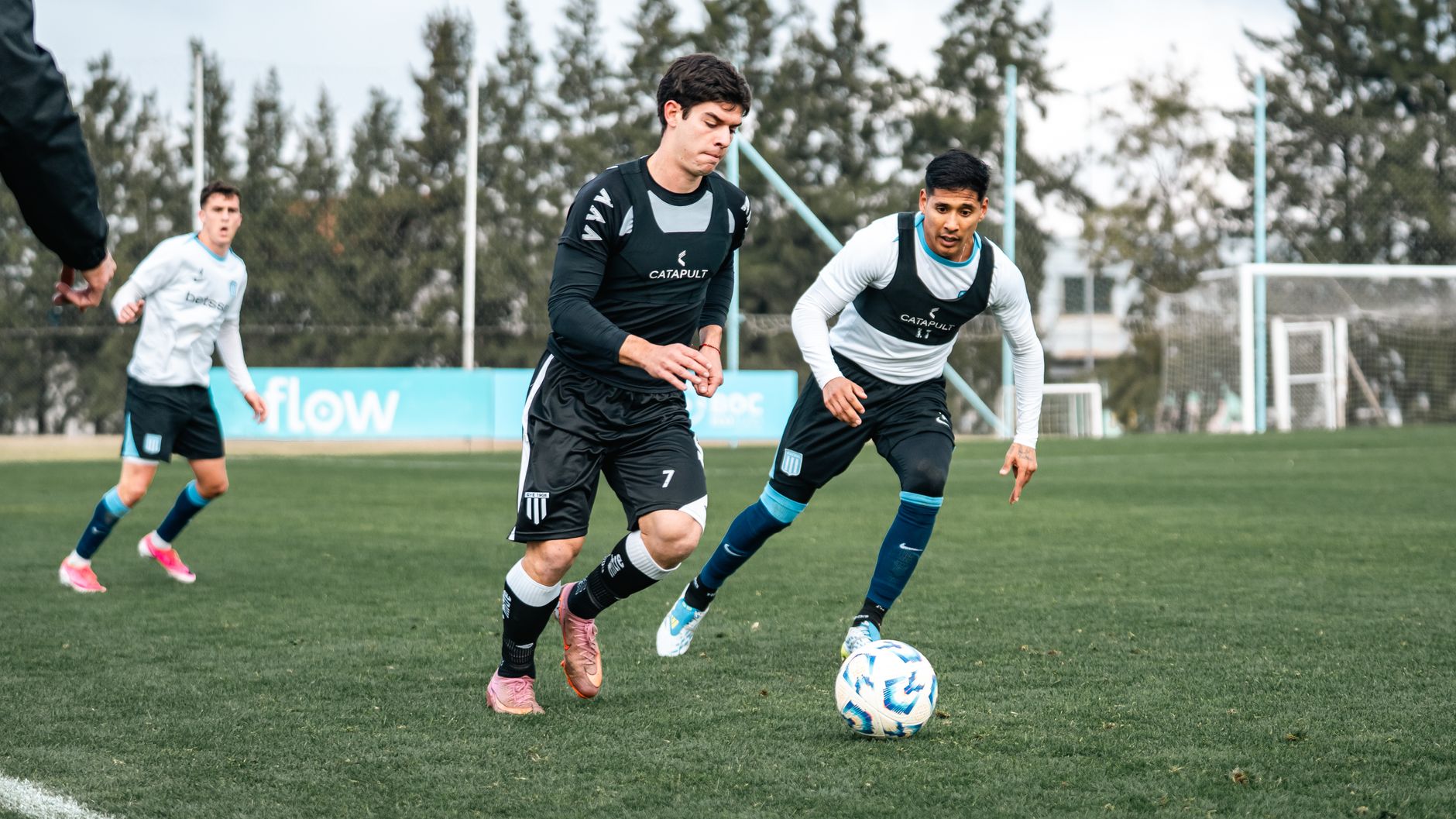
Photo by Franco Monsalvo on Pexels
[Internal Link: position-specific football conditioning strategies]
What does this mean now?
It means a useful football strength training plan is a flexible decision system, not a sacred list of exercises copied from a professional club. The University of Oklahoma’s football performance resources illustrate how organized programs combine movement coaching, nutrition, strength development, and athlete monitoring, but a youth player should not imitate collegiate volume without collegiate recovery resources. A recreational footballer with two matches per week may need one full gym session and one short maintenance session, not four heroic workouts. The minimum effective dose is often underrated: two lower-body patterns, one push, one pull, one trunk exercise, and a small amount of jumping can maintain progress when match density is high. My contrarian conclusion is that consistency beats novelty almost every time. Changing exercises weekly makes progress difficult to measure, while repeating a controlled plan for four weeks reveals whether strength, jump height, sprint quality, and soreness are actually moving in the right direction.
A robust session can be organized as follows:
- Warm-up: 8–12 minutes of mobility, skips, low-level jumps, and progressive accelerations.
- Primary strength: 3–5 sets of 3–6 repetitions at approximately RPE 7–8.
- Secondary unilateral lift: 3–4 sets of 5–8 repetitions per side.
- Upper-body push and pull: 3–4 sets of 6–10 repetitions.
- Power exercise: 3–5 sets of 2–5 explosive repetitions, stopping before speed drops.
- Injury-resilience work: Copenhagen planks, calf raises, Nordic hamstring progressions, or tibialis work.
- Cooldown: low-intensity movement and a brief recovery check.
Do not take every set to failure. Failure training has a place in some hypertrophy blocks, but frequent failure on squats, deadlifts, and lunges can damage sprint quality for days. Track the load, repetitions, RPE, sleep, soreness, and next-day movement. That record will tell you more than the motivational speech printed on the gym wall, though the wall may be less judgmental.
Want the practical checklist before you build your next week? Review the following progression rules and keep the plan boring enough to work.
How can players progress without overtraining?
Players can progress safely by changing only one major training variable at a time and reducing volume when match demands rise. Increase load by roughly 2.5–5% when all prescribed repetitions are completed with stable technique and no meaningful speed loss; otherwise, keep the load unchanged or reduce one set. A two-week drop in sprint quality, persistent soreness above 48 hours, worsening sleep, or unusual irritability should trigger a workload review rather than another motivational poster.
Use these practical rules:
- Add repetitions before adding weight when technique is still developing.
- Add weight before adding extra sets once the repetition range is mastered.
- Keep explosive repetitions low enough that every landing and sprint remains clean.
- Reduce gym volume by 30–50% during congested match weeks.
- Keep intensity moderately high during maintenance phases while cutting total sets.
- Test strength or jumps only when the player is rested and the result can inform programming.
Nutrition and recovery are part of the plan, not decorative extras. The International Olympic Committee has highlighted the importance of nutrition, hydration, and recovery in athlete preparation, while the Australian Institute of Sport provides practical guidance on sports nutrition and performance support. A simple target is regular meals containing protein, carbohydrate around hard training, fluids matched to sweat loss, and seven to nine hours of sleep where possible. Supplements cannot rescue a player eating poorly and sleeping five hours; I tried variations of that foolishness years ago, and the body remains unimpressed.

Photo by Omar Ramadan on Pexels
Three predictions for next quarter
Will football strength programs become more individualized?
Yes, football strength programs will become more individualized because identical weekly plans cannot account for age, position, match minutes, injury history, and recovery capacity. Clubs will continue combining GPS data, force-plate testing, jump monitoring, and subjective wellness reports, but the most useful systems will remain those coaches can interpret quickly. A dashboard with 40 metrics is not automatically superior to a notebook containing sprint exposure, sleep, soreness, and match minutes. The likely next-quarter development is wider use of individualized “micro-doses”: short add-on sessions for calves, hamstrings, adductors, trunk control, or upper-body strength after team training. These doses can address weak links without creating the fatigue of a full workout. Players should expect fewer universal prescriptions and more decisions based on whether their current output is stable. That sounds sensible, which means someone will still try to copy a Champions League club’s program from a screenshot.
Will speed replace traditional strength training?
No, speed will not replace traditional strength training because force production remains a foundation of acceleration, braking, jumping, and contact performance. However, strength training will be judged more strictly by transfer: does the player sprint faster, tolerate deceleration, jump higher, or maintain output late in matches? This will favor moderate-volume compound lifts, unilateral exercises, heavy isometrics, plyometrics, and sprint exposure over excessive bodybuilding volume. The most useful test is not whether a player can add 10 kilograms to a deadlift; it is whether strength improved without slower sprint times, poorer movement quality, or increased soreness. Coaches will increasingly pair gym testing with field testing, using short sprints, repeated sprint ability, countermovement jumps, and change-of-direction tests. Players who only chase lifting numbers may discover the unpleasant truth that the football pitch does not award medals for impressive gym spreadsheets.
Will workload monitoring reduce injuries?
Workload monitoring should reduce avoidable injuries, but it cannot eliminate them because contact, poor surfaces, fatigue, previous injury, and random events remain part of football. The strongest benefit comes from identifying sudden changes, such as a player moving from minimal sprinting to repeated maximal runs after several weeks away. A cautious return should progress through linear running, controlled acceleration, planned deceleration, reactive changes of direction, and football-specific exposure before full competition. Monitoring is most valuable when it changes behavior: fewer hard sessions, better warm-ups, more recovery, or a slower return. It is not valuable when staff collect data and ignore it because the weekend match feels important. That is how risk management becomes decorative paperwork, and decorative paperwork has never protected a hamstring.
[Internal Link: football injury prevention and recovery guide]
Frequently Asked Questions
Q: What is a football strength training plan?
A football strength training plan is a structured program that develops force, power, speed support, stability, and injury resilience for football actions. It normally combines compound resistance exercises, unilateral work, plyometrics, sprinting, trunk training, mobility, and recovery. Most players can begin with two strength sessions per week, provided those sessions are adjusted around matches and team practices.
Q: How should a beginner start a football strength training plan?
A beginner should start with two full-body sessions per week using controlled loads, simple movement patterns, and two or three sets per exercise. Begin with a squat or split squat, hip hinge, push, pull, calf exercise, trunk exercise, and low-volume jumps or skips. Leave one or two repetitions in reserve, learn technique from a qualified coach, and increase load only after two consecutive sessions feel technically consistent.
Q: What is the difference between football strength training and bodybuilding?
Football strength training prioritizes force relative to body mass, explosive power, unilateral control, sprint transfer, and fatigue management, while bodybuilding primarily targets muscle size and local muscular development. Bodybuilding exercises can support football, especially during an off-season hypertrophy block, but high-volume isolation work may create soreness without improving running performance. A footballer should judge an exercise by its effect on movement, availability, and match output.
Q: How many days per week should football players lift weights?
Most football players should lift weights two days per week during normal training, reducing to one maintenance session during congested fixture periods. High-level players may use three or more carefully managed exposures, including short micro-doses, but that schedule requires monitoring and professional supervision. Leave approximately 48 hours between demanding lower-body sessions whenever possible, particularly when sprinting and matches are also included.
Q: Why does my football strength program make me slower?
A football strength program can make you slower when volume is excessive, lower-body sessions are placed too close to matches, body mass rises too quickly, or explosive work is performed after severe fatigue. Persistent soreness, reduced jump height, slower 10-meter times, and poor sleep are practical warning signs. Reduce sets by 30–50% for one week, preserve quality, and review nutrition, sleep, sprint exposure, and exercise technique.
Q: Does football strength training prevent hamstring and groin injuries?
Football strength training can reduce injury risk but cannot guarantee prevention because injuries also involve sprint exposure, previous damage, fatigue, contact, and playing conditions. Include progressive Nordic hamstring work, Copenhagen planks, calf raises, hip-strength exercises, acceleration exposure, and controlled deceleration. Progress these exercises gradually; suddenly adding maximal sprints or aggressive Nordic volume is a reliable way to create the exact problem you were trying to prevent.
Q: How much does a football strength training plan cost?
A football strength training plan can cost nothing if you use bodyweight exercises, a field, and a carefully logged progression, while coached gym programming may cost approximately $30–$150 per session depending on location and provider. A basic gym membership is often enough for squats, hinges, presses, pulls, and accessory work. The essential requirement is not expensive equipment but qualified instruction, consistent tracking, and a schedule that respects matches and recovery.
A football strength training plan works when it improves the actions that decide matches without exhausting the player before those actions occur. Build strength gradually, expose yourself to speed regularly, protect recovery, and adjust the plan to position, age, fixtures, and injury history. If your numbers rise while sprinting, sleep, and movement quality collapse, congratulations: you have trained the spreadsheet instead of the footballer. Start conservatively, measure honestly, and progress only when the body earns it.
Explore more football performance analysis, tactical insight, and 2026 World Cup coverage with Pitch Notes.
Thank you for reading.
Pitch Notes · Editorial Archive