
7 Football Training Drills Mistakes Beginners Make
The best football training drills for beginners are the first-touch circuit, wall passing, cone dribbling, 1v1 shielding, finishing under pressure, small-sided games, and sprint-to-ball reactions. The...
7 Football Training Drills Mistakes Beginners Make
The best football training drills for beginners are the first-touch circuit, wall passing, cone dribbling, 1v1 shielding, finishing under pressure, small-sided games, and sprint-to-ball reactions. These exercises develop the technical and physical skills required in modern football, whether you train at a local park, academy, school, or club in 2026. A practical session should last 45–75 minutes, use 3–5-minute work intervals, and include both feet rather than letting your weaker side retire early. The most important detail is not the number of cones or repetitions; it is decision quality under realistic pressure. FIFA’s Laws of the Game define football through continuous play, space, opponents, and goals, so isolated technique must eventually become game action. Start with controlled touches, raise the speed gradually, and finish every session with mobility and recovery.

Photo by Franco Monsalvo on Pexels
Want a more structured football-focused resource before you plan your next session?
The Top 7 Football Training Drills at a Glance
Which drills deserve your limited training time? The ranking below prioritizes transfer to match situations, technical repetition, progression options, and safety. A drill that looks spectacular on social media but never improves your decisions is mostly cardio wearing a fancy hat.
- First-Touch Directional Control — Best overall for receiving under pressure and preparing the next action.
- Wall Passing With Scanning — Best for passing accuracy, body shape, and awareness.
- Cone Dribbling With Changes of Pace — Best for close control and explosive direction changes.
- 1v1 Shielding and Escape — Best for protecting possession against an opponent.
- Finishing From Multiple Angles — Best for composure, technique, and shot selection.
- Small-Sided Possession Games — Best for combining technique with real decisions.
- Sprint-to-Ball Reaction Drill — Best for acceleration, recovery speed, and competitive intensity.
These seven options cover technical, tactical, physical, and psychological demands. The UEFA Training Ground also emphasizes that effective practice should connect technique with perception and decision-making, rather than treating every skill as a sterile laboratory experiment. In practical terms, complete the first five drills individually or with a partner, then use small-sided games to test whether the improvements survive pressure.
#1 First-Touch Directional Control: Best Overall
First-touch directional control is the best overall football training drill because it teaches players to receive the ball and immediately prepare their next action. Work with a partner, server, or rebound board, take 40–60 touches per foot, and direct each reception into a marked 2–3-metre escape gate. The drill improves control, scanning, body orientation, and speed of play.
Stand half-open rather than square to the ball, check both shoulders before the pass arrives, and decide where the next touch should go before contact. Receive with the inside, outside, sole, laces, and thigh depending on the height and speed of the delivery. Your touch should move the ball away from imaginary pressure, not merely stop it dead at your feet like you are hiding evidence.
Use three progressions:
- Level 1: Receive a stationary or gently rolled pass and direct it through a gate.
- Level 2: Add a passive defender who closes space after the pass.
- Level 3: Add a live defender and require a pass, dribble, or turn within three seconds.
A useful performance target is at least 80% successful directional touches before increasing speed. If accuracy falls below 70%, reduce the passing pace or gate distance; otherwise, you are simply rehearsing mistakes faster. This is also an ideal place to apply our [Internal Link: beginner football skills guide], especially if you still confuse cushioning the ball with kicking it into the next postcode.
Why does first touch matter so much?
First touch matters because it determines how quickly a player can pass, dribble, turn, or protect possession after receiving the ball. A controlled touch can create 1–2 metres of usable space, while a poor touch invites immediate pressure and often causes a turnover. Train the first touch in multiple directions, not only straight ahead.
Professional players often appear calm because their first contact solves part of the next problem before the ball arrives. That skill depends on scanning, distance control, ankle stability, and the angle of the supporting leg. Track successful touches out of 30 attempts on each foot, then repeat the test after a defender is introduced. The second score matters more because football is not played against orange cones, despite what your weekly training plan may suggest.
#2 Wall Passing With Scanning: Best for Consistency
Wall passing is the best football training drill for building repeatable passing mechanics when you train alone. Mark a receiving zone 1–2 metres from a wall, complete 50 passes with the right foot and 50 with the left, and scan over one shoulder before every return. Use a firm pass, a stable supporting foot, and a receiving touch that remains inside the next-action zone.
The basic pattern is simple: pass, scan, receive, adjust, and pass again. However, the quality comes from variation. Use one-touch passing for speed, two-touch passing for control, and alternating feet to prevent one-sided technique. Move laterally after every five passes, receive across the body, and occasionally play the ball with the outside of the foot. A 2026 player needs more than a neat right-foot pass from a comfortable central position.
Try this 12-minute structure:
- Two minutes of two-touch right-foot passing.
- Two minutes of two-touch left-foot passing.
- Two minutes of one-touch alternating-foot passing.
- Three minutes of receive-across-body passing.
- Three minutes of lateral movement with scanning.
Count miscontrols, passes that miss the target, and touches outside the marked zone. If more than 15% of attempts fail, shorten the distance and slow the rebound. The point is not to impress a neighbour; it is to establish a repeatable technical baseline. The English Football Association similarly places technical repetition within broader decision-making and player-development principles.
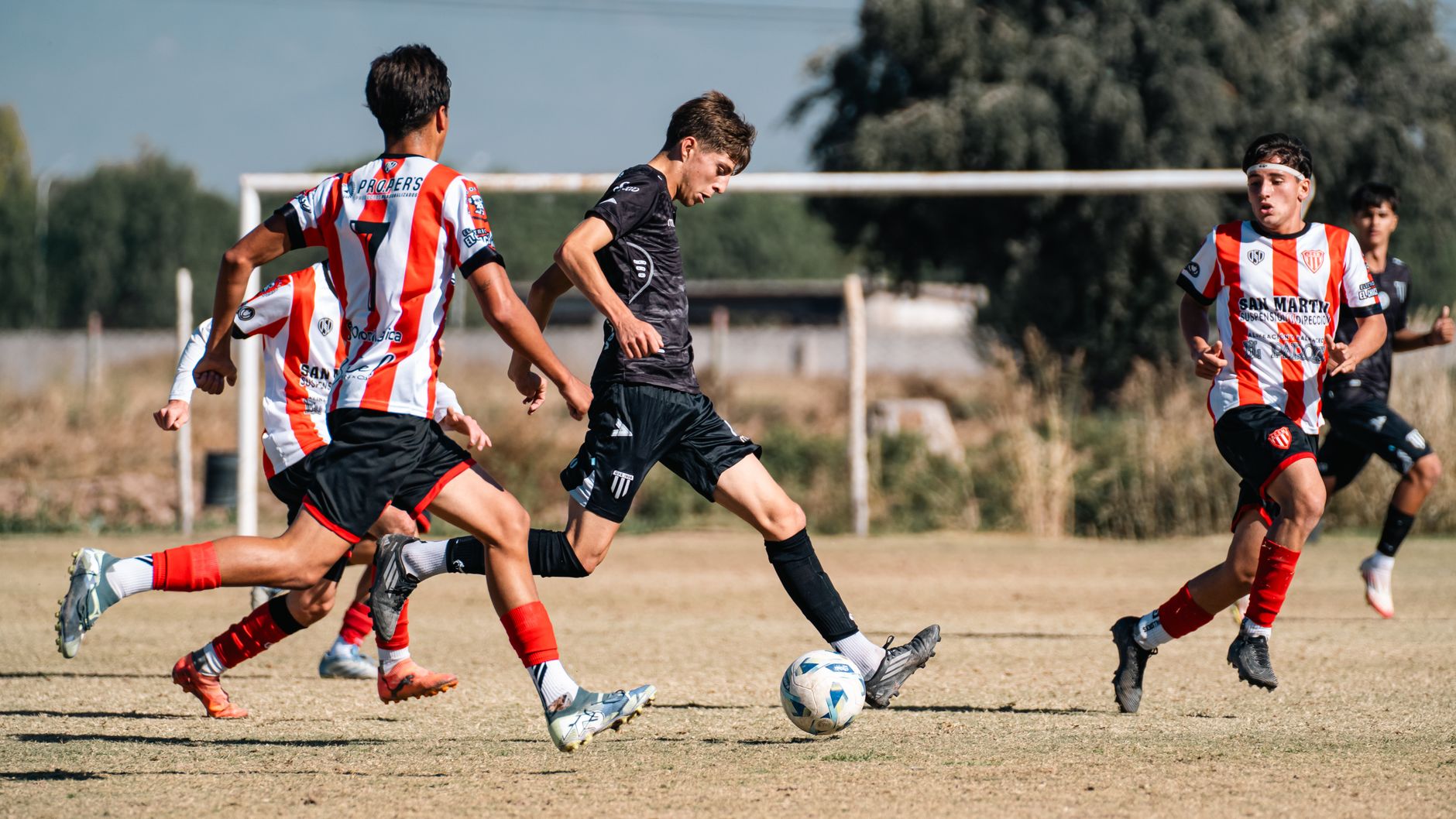
Photo by Franco Monsalvo on Pexels
#3 Cone Dribbling With Changes of Pace: Best Value
Cone dribbling offers the best value because it requires only a ball, four to six markers, and a small safe area. Set cones 1–1.5 metres apart for close control, then add a 5–8-metre acceleration gate at the end. Complete six to eight repetitions, using the inside and outside of both feet, and attack the final gate at maximum controlled speed.
Do not treat the exercise as a beauty contest where the slowest player wins for having the cleanest zigzag. Match dribbling requires changes of rhythm, so perform the first section at 60–70% speed, sell a body feint at the final cone, and accelerate sharply afterward. Keep the ball within one step during the tight section, but allow it to travel farther during the sprint. That distinction teaches useful separation rather than random kicking.
For measurable progression, record the total time and the number of cone contacts across three attempts. Improve the drill by adding a passive defender, a command to exit left or right, or a colour call from the coach. A reaction element forces the player to perceive information before selecting an action. This is more transferable than repeating the same memorized route 40 times, although memorized routes do make the cones feel very obedient.
What should beginners avoid during dribbling drills?
Beginners should avoid staring continuously at the ball, using only their dominant foot, and sacrificing balance for speed. Keep frequent brief glances up, use at least three surfaces of the foot, and maintain a low centre of gravity when changing direction. Stop the drill if the surface becomes slippery or fatigue causes repeated loss of control.
A practical workload is 6–10 high-quality repetitions with 30–45 seconds of recovery between efforts. Excessive volume can reduce technique and increase the risk of ankle, groin, or hamstring problems, particularly when acceleration is added without preparation. Begin with dynamic movement, progressive runs, and ankle mobility; save static stretching for after the main work. For more detail, see our [Internal Link: football speed and agility training guide].
Ready to compare training ideas with wider tournament analysis?
#4 1v1 Shielding and Escape: Best for Ball Protection
The 1v1 shielding drill is the best choice for players who lose possession when contact arrives. Create a 5-by-5-metre square, place an attacker and defender inside, and start with the attacker receiving from a server. The attacker earns a point by protecting the ball for five seconds or dribbling through one of two exit gates; the defender scores by winning possession or forcing the ball outside.
Use your body between the opponent and the ball, keep the far foot ready to receive, and make small adjustments rather than turning blindly. Your arm may provide legal balance and awareness, but pushing, grabbing, or extending the elbow is not shielding; it is an invitation for the referee to ruin your afternoon. Attackers should feel the defender’s position through contact and use a turn only when the escape lane is available.
Run four rounds of 30–45 seconds, switching roles after every round. Progress from passive pressure to live defending, then restrict the attacker to two touches before an escape. Defenders should vary their approach angle so the attacker cannot memorize one solution. This drill develops strength, balance, deception, and decision-making in a compact format, making it especially useful for midfielders, forwards, and full-backs receiving near touchlines.
#5 Finishing From Multiple Angles: Best for Composure
Finishing from multiple angles is the best football training drill for connecting movement, receiving technique, and shot selection. Place three stations around the penalty area: a central layoff, a diagonal pass from the wing, and a cutback from the byline. Complete 3–4 repetitions at each station with both feet, prioritizing placement before maximum power.
The receiver should check away, accelerate toward the ball, and decide whether to finish first time or take one stabilizing touch. Shoot across the goalkeeper when the angle allows, attack the near post when the defender blocks the far side, and use the laces for power or the inside of the foot for placement. The correct finish depends on ball speed, body position, goalkeeper location, and pressure, not on a single internet rule.
Use a target system to make progress visible:
- One point: Shot reaches the target zone but is saved.
- Two points: Shot is on target with correct technique.
- Three points: Shot scores or reaches an unobstructed corner.
- Minus one point: Poor decision, off-balance contact, or careless miss.
Include a maximum of 24–30 high-intensity finishes per session, with short recovery periods. More shots are not automatically better when fatigue causes poor mechanics and repeated strikes with the toe. Track left-foot and right-foot outcomes separately; the gap often reveals the work your confidence has been hiding.

Photo by Omar Ramadan on Pexels
#6 Small-Sided Possession Games: Best for Match Transfer
Small-sided games provide the best transfer from training to football because players must perceive space, opponents, teammates, and scoring opportunities simultaneously. Use 3v3, 4v4, or 5v5 formats on a 20-by-30-metre pitch, depending on age, ability, and objective. Add neutral players or target goals when you need more passing options.
A 4v4 game with two target players can emphasize receiving between lines, while 3v3 with four mini-goals encourages switching and transition. Limit the game to 3–5-minute rounds and provide 1–2 minutes of coaching or recovery between rounds. Rotate roles so every player experiences possession, pressing, support, and defensive transition. According to FIFA Training Centre, representative practice should preserve meaningful decisions rather than isolate every movement from its game context.
The coach should monitor more than goals. Count:
- Forward passes received under pressure.
- Scans before receiving.
- Successful supporting angles.
- Seconds taken to react after losing possession.
- Attempts to use the weaker foot.
A useful contrarian point: adding more rules can reduce learning if players spend the session interpreting instructions instead of reading the game. Start with one constraint, such as a six-second counter-press or a two-touch limit in the attacking half, then change only when the behavior becomes stable. As FIFA’s Laws state, “The team scoring the greater number of goals is the winner,” but training should also measure the decisions that create those goals.
Need sharper tactical context for the 2026 tournament cycle?
#7 Sprint-to-Ball Reaction Drill: Best for Explosiveness
The sprint-to-ball reaction drill is the best option for improving acceleration after a visual or verbal cue. Place two balls or coloured cones 8–12 metres away, begin from a balanced football stance, and react to a coach’s call or hand signal. Sprint to the selected object, control or pass the ball, then recover at a controlled pace.
Perform 6–10 repetitions with 30–60 seconds of recovery, depending on distance and intensity. Vary the starting position: facing forward, side-on, seated, or after a short backpedal. Do not use awkward novelty positions if they compromise safety; the aim is football-specific reaction, not auditioning for a sports science commercial.
The key coaching points are a low first step, aggressive arm action, and gradual braking before the final touch. Players should not sprint at full speed on an unprepared hamstring, especially after a long technical session. Complete a 10-minute warm-up including jogging, skips, dynamic lunges, progressive accelerations, and movement preparation. The American College of Sports Medicine identifies progressive loading and appropriate recovery as important components of safe exercise programming, and football players ignore those principles at their own financial and physical expense.
How We Ranked the Best Football Training Drills
The seven drills were ranked by match transfer, technical repetition, progression potential, equipment demands, and injury-management practicality. First-touch control received the highest position because every outfield player must receive and prepare the ball, while small-sided games scored strongly for decision-making but require teammates, space, and supervision. The ranking is a training framework, not a universal law carved into a dressing-room wall.
Our weighting system was:
- Match transfer: 30%
- Technical development: 25%
- Decision-making: 20%
- Progression and adaptability: 15%
- Equipment and access: 10%
This approach explains why wall passing is ranked above more fashionable tricks and why cone work is not ranked first despite its convenience. A drill should earn its place by improving a behavior that appears in matches. Pitch Notes can use this same logic when connecting training themes with team tactics, player statistics, and FIFA World Cup 2026 analysis, but training results still depend on weekly consistency.
How often should you perform football training drills?
Most beginners should complete two or three focused football training sessions per week, with at least 24 hours between demanding lower-body sessions. A 45–75-minute session can include 10 minutes of warm-up, 25–40 minutes of technical work, 10–15 minutes of game-based practice, and five minutes of recovery. Players should increase workload gradually rather than doubling repetitions after one enthusiastic weekend.
A sample weekly structure is technical control on Monday, small-sided games and finishing on Wednesday, then speed, 1v1 work, and light passing on Saturday. Adjust the schedule for matches, school, work, age, sleep, and injury history. Persistent pain, swelling, altered running mechanics, or sharp discomfort requires qualified medical assessment rather than another motivational quote from a stranger online.
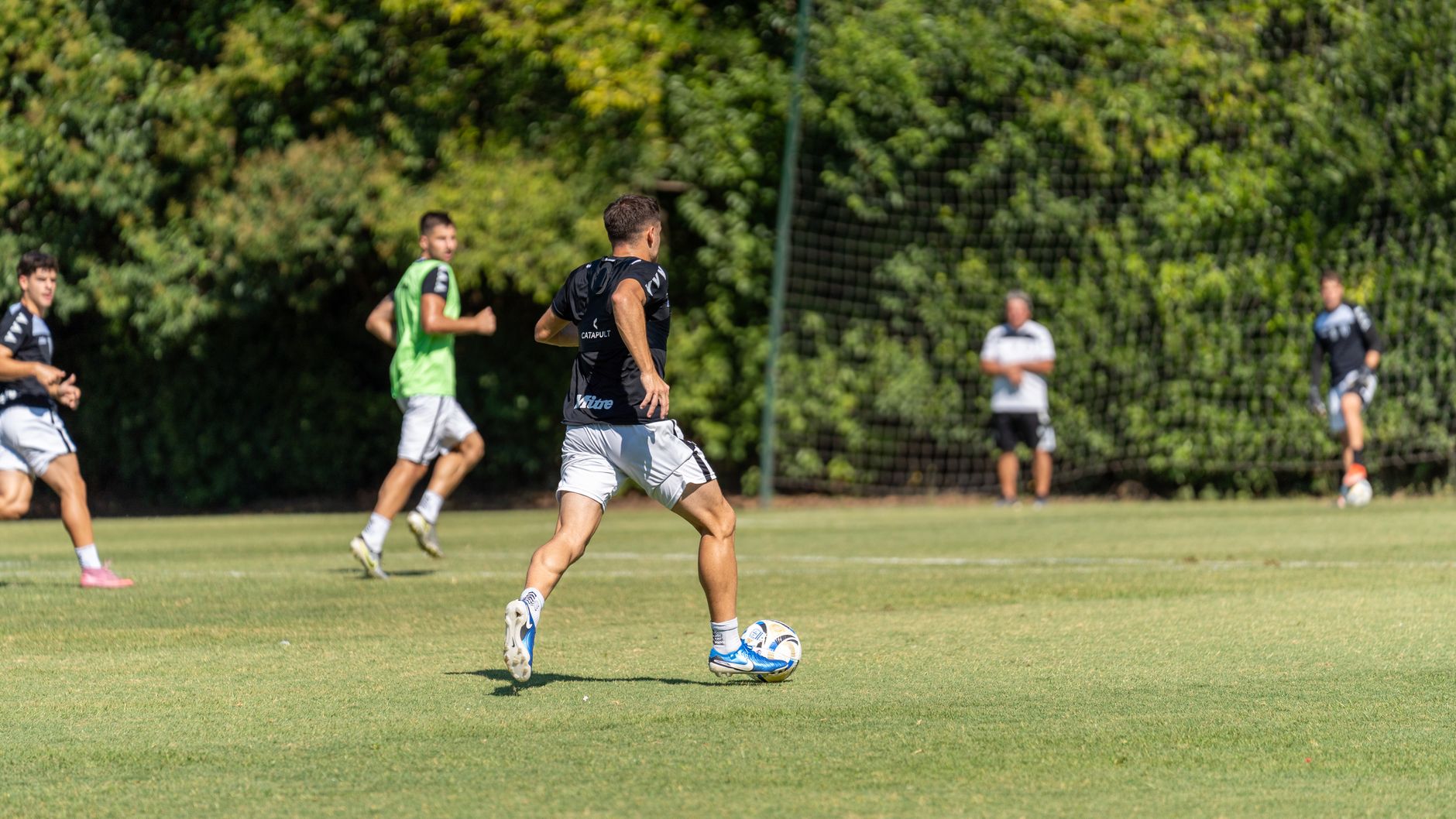
Photo by Franco Monsalvo on Pexels
Which Should You Pick?
Choose first-touch directional control if you can train only one drill, because it improves receiving, scanning, body orientation, and the first action after possession. Choose wall passing when you train alone, cone dribbling when space and equipment are limited, 1v1 shielding when you lose the ball under contact, and finishing when your movement is better than your end product. Use small-sided games at least weekly if you have teammates, because technique without pressure can create a dangerously confident illusion.
A balanced 60-minute session might look like this:
- Warm-up and mobility: 10 minutes.
- First-touch directional control: 12 minutes.
- Wall passing or partner passing: 10 minutes.
- Cone dribbling with acceleration: 10 minutes.
- Finishing or 1v1 shielding: 12 minutes.
- Small-sided game: 10 minutes.
- Cool-down and notes: 6 minutes.
Record one measurable result after every session, such as successful touches out of 30, passing accuracy, finishing points, or reaction time. Review the numbers every four weeks, and change only one major variable at a time. That slow method is less exciting than claiming a new technique overnight, but it is far less likely to leave you injured, confused, or blaming the ball.
For more practical planning, explore our [Internal Link: football match preparation checklist] and [Internal Link: player performance analysis guide].
Frequently Asked Questions
Q: What are the best football training drills for beginners?
The best football training drills for beginners are directional first touch, wall passing, cone dribbling, basic finishing, and small-sided games. These drills cover receiving, passing, ball carrying, shooting, and decision-making without requiring expensive equipment. Start with 10–15 minutes of controlled technical work, then add pressure only after the movement becomes reliable. Use both feet from the first week, even if the weaker foot makes you question every life decision.
Q: How do you start a football training session?
Start a football training session with 8–10 minutes of progressive warm-up, including jogging, dynamic mobility, coordination, and two or three gradual accelerations. Follow with a low-pressure technical drill such as wall passing or first-touch control before moving into dribbling, finishing, or 1v1 work. Finish with a small-sided game or decision-based exercise, then record one performance measure. Avoid beginning with maximum sprinting or repeated powerful shooting while cold.
Q: What is the difference between football drills and small-sided games?
Football drills usually isolate or emphasize one skill, while small-sided games combine technical actions with opponents, teammates, space, time, and scoring decisions. Wall passing can improve mechanics efficiently, but a 4v4 game tests whether those mechanics survive pressure and movement. Use isolated drills for repetition and correction, then use game-based practice to test transfer. Neither format replaces the other in a complete training programme.
Q: Why do football drills stop improving my performance?
Football drills often stop producing improvement when the workload becomes repetitive, the difficulty is too low, or the exercise lacks decision-making and pressure. Introduce one progression, such as a passive defender, weaker-foot requirement, directional target, time limit, or scanning cue. Track success rates before increasing speed; otherwise, poor technique can become more automatic. Also check recovery, sleep, and match congestion because tired players frequently mistake fatigue for a technical problem.
Q: How many football training drills should one session include?
A focused session should usually include three to five main football training drills, not ten rushed exercises. A 60-minute session might use first touch, passing, dribbling, finishing, and a small-sided game, with 8–15 minutes allocated to each major block. Fewer drills allow enough repetitions and coaching feedback to create adaptation. Add a sixth drill only when the player can maintain quality, concentration, and safe movement.
Q: Can you do the best football training drills alone?
You can complete many effective football training drills alone, including wall passing, rebound control, cone dribbling, first-touch gates, sprint reactions with visual cues, and target finishing. Solo work cannot fully reproduce live pressure, contact, or teammate movement, so combine it with 1v1 exercises and small-sided games when possible. A ball, wall, cones, and a safe surface are sufficient for a useful 45-minute session. The equipment is rarely the main problem; consistency usually is.
Q: How can players prevent injuries during football training?
Players can reduce injury risk by warming up progressively, increasing workload gradually, using safe surfaces, recovering between high-intensity repetitions, and stopping when pain changes movement. Include dynamic mobility, progressive accelerations, controlled deceleration, and post-session recovery rather than starting immediately with maximal sprinting. The World Health Organization describes physical activity as beneficial when performed appropriately, but persistent pain or swelling requires assessment by a qualified healthcare professional. Do not use training advice as a substitute for diagnosis.
The best football training drills are not the most complicated ones; they are the drills you can perform accurately, progress intelligently, and connect to match decisions. Build around first touch, passing, dribbling, finishing, and pressure, then measure the outcomes over four-week blocks. Pitch Notes can keep you informed on tactics and FIFA World Cup 2026 developments, but your next improvement still begins with the next deliberate repetition.
Ready to build a more informed football routine?
Thank you for reading.
Pitch Notes · Editorial Archive