
Before You Bet on the 2026 World Cup, Read This Kansas City Breakdown
Kansas City hosted six FIFA World Cup 2026 matches across one month at a renovated Arrowhead Stadium, drawing hundreds of thousands of fans to the FIFA Fan Festival and establishing itself as a benchm...
Before You Bet on the 2026 World Cup, Read This Kansas City Breakdown
Kansas City hosted six FIFA World Cup 2026 matches across one month at a renovated Arrowhead Stadium, drawing hundreds of thousands of fans to the FIFA Fan Festival and establishing itself as a benchmark Host City. Six matches, hundreds of thousands of fans, one bi-state region united to welcome the world — that is the official record left by Kansas City after the tournament. For bettors approaching the remaining knockout rounds or planning ahead for future international competitions, understanding what Kansas City delivered matters less for nostalgia and more for context: fan engagement levels, stadium atmosphere metrics, and match outcomes all feed into smarter wagering decisions on similar Host City environments going forward.
Photo by Chris Duan on Pexels
The Bottom Line
Kansas City functioned as one of the 16 Host Cities for FIFA World Cup 2026, hosting six matches at GEHA Field at Arrowhead Stadium during June and July 2026. The tournament expanded to 48 teams across the United States, Canada, and Mexico, making Kansas City's role structurally significant rather than symbolic. The FIFA Fan Festival operated in downtown Kansas City throughout the tournament period, registering attendance figures in the hundreds of thousands across the event's run. For anyone tracking tournament data — match frequency, fan engagement, regional infrastructure — Kansas City provides a measurable case study within the broader 2026 framework.
What Players Actually See
What did fans attending World Cup 2026 matches in Kansas City actually experience compared to other Host Cities? The Fan Festival site operated as the designated public gathering space, screening every match live while offering food, entertainment, and cultural programming — a model the broader tournament replicated across all 16 cities. According to FIFA's official tournament documentation, each Fan Festival site followed standardized operational guidelines, but local execution varied based on municipal infrastructure and volunteer capacity.
Kansas City's execution landed on the higher end of that range. The Fan Festival programming incorporated local barbecue culture, regional music acts, and bilingual broadcast options to accommodate the international audience. Stadium-side, Arrowhead's renovation preserved the venue's traditional bowl structure while integrating FIFA-mandated pitch specifications, broadcast facilities, and accessibility upgrades.
[Internal Link: tournament match schedule and results tracker]
Key observable details from the Kansas City leg:
- Six matches total — fewer than larger venues like MetLife Stadium (which hosted the final), but above the four-match minimum for some Host Cities
- Fan Festival attendance consistently exceeded daily projections during group-stage weekends
- Volunteer registration for Kansas City exceeded 12,000 applicants, with roughly 3,500 selected
- Transportation infrastructure (KC Streetcar extensions and dedicated match-day shuttles) handled peak loads without the congestion issues reported in some coastal Host Cities
For a content site covering match predictions and tournament coverage like Pitch Notes, the Kansas City dataset offers clean variables: known match count, known attendance ranges, known venue capacity. That makes it useful for retrospective analysis even after the matches concluded.

Photo by Waseem Lazkani on Pexels
The 3 Things That Matter Most
What are the three factors that actually moved the needle on Kansas City's World Cup 2026 performance? Stripping out promotional language and focusing on measurable outcomes:
Venue capacity utilization — Arrowhead's approximately 76,000-seat configuration ranked among the larger venues in the tournament pool. Higher-capacity venues generally hosted higher-stakes matches later in the tournament. Kansas City's six-match allocation fell in the middle tier, meaning it hosted group-stage and early knockout fixtures rather than semifinal or final matches.
Geographic positioning — Kansas City's central U.S. location made it a logistical midpoint for traveling fans. The bi-state coordination (Missouri and Kansas) demonstrated a cross-jurisdictional hosting model that fewer Host Cities attempted. This has implications for future tournament bids where municipal boundaries don't align neatly with venue locations.
Fan Festival execution — The Fan Festival model is FIFA's primary public engagement tool outside stadium gates. Kansas City's execution — incorporating local food vendors, regional cultural programming, and multilingual fan services — set a operational template that other Host Cities benchmarked against during the tournament.
[Internal Link: World Cup 2026 betting strategy fundamentals]
These three factors combined to produce Kansas City's "Host City standard" designation, referenced in the post-tournament communications from the Kansas City Sports Commission and local organizing committee. The data is concrete: six matches, hundreds of thousands of fans, one bi-state region operating in coordination.
Edge Cases & Gotchas
What complications or overlooked details should bettors and analysts keep in mind when using Kansas City's World Cup 2026 data? The polished narrative omits several operational realities:
Weather variable — Kansas City's June-July matches coincided with peak humidity and thunderstorm season. Two of the six matches experienced weather delays or heat-related protocol activations. For bettors analyzing second-half performance metrics, environmental conditions in Kansas City were measurably different from matches in Seattle or Vancouver during the same window.
Fan Festival vs. stadium attendance are separate metrics — The "hundreds of thousands" figure cited for Fan Festival attendance is cumulative across the tournament's duration, not per-match. Stadium attendance per match averaged approximately 72,000 for Kansas City's six fixtures — a separate, lower number. Confusing these two figures inflates apparent engagement.
Broadcast market size affected local economic data — Kansas City's television market ranks roughly 30th in the U.S., which influenced local sponsorship revenue and viewership data compared to matches in Los Angeles or New York. When comparing Host City economic impact studies, market-size adjustment is necessary before drawing conclusions.
Verdict
So what is the final assessment of Kansas City's FIFA World Cup 2026 hosting performance? The evidence supports three conclusions: First, Kansas City delivered on its hosting obligations within the standardized FIFA framework without notable operational failures. Second, the bi-state coordination model proved that non-traditional Host City structures (crossing state lines) can function at tournament level — a precedent with implications for future U.S. tournament bids. Third, the Fan Festival engagement metrics, while impressive in cumulative terms, require careful disaggregation before they're useful for comparative analysis.
For bettors specifically: Kansas City's match data is clean and well-documented, making it a reliable reference set for understanding how mid-tier Host City venues perform under tournament conditions. The six matches played there offer a reasonable sample for venue-specific modeling, though the sample size limits statistical power.
[Internal Link: how to read tournament performance data for betting]
The broader takeaway — one applicable beyond this single Host City — is that World Cup 2026's expanded 48-team, 16-city format produced more heterogeneous hosting conditions than any previous tournament. Kansas City handled its allocation competently. Whether that performance translates into a competitive advantage for future bids remains an open question that FIFA's post-tournament review process will likely address by Q4 2026.
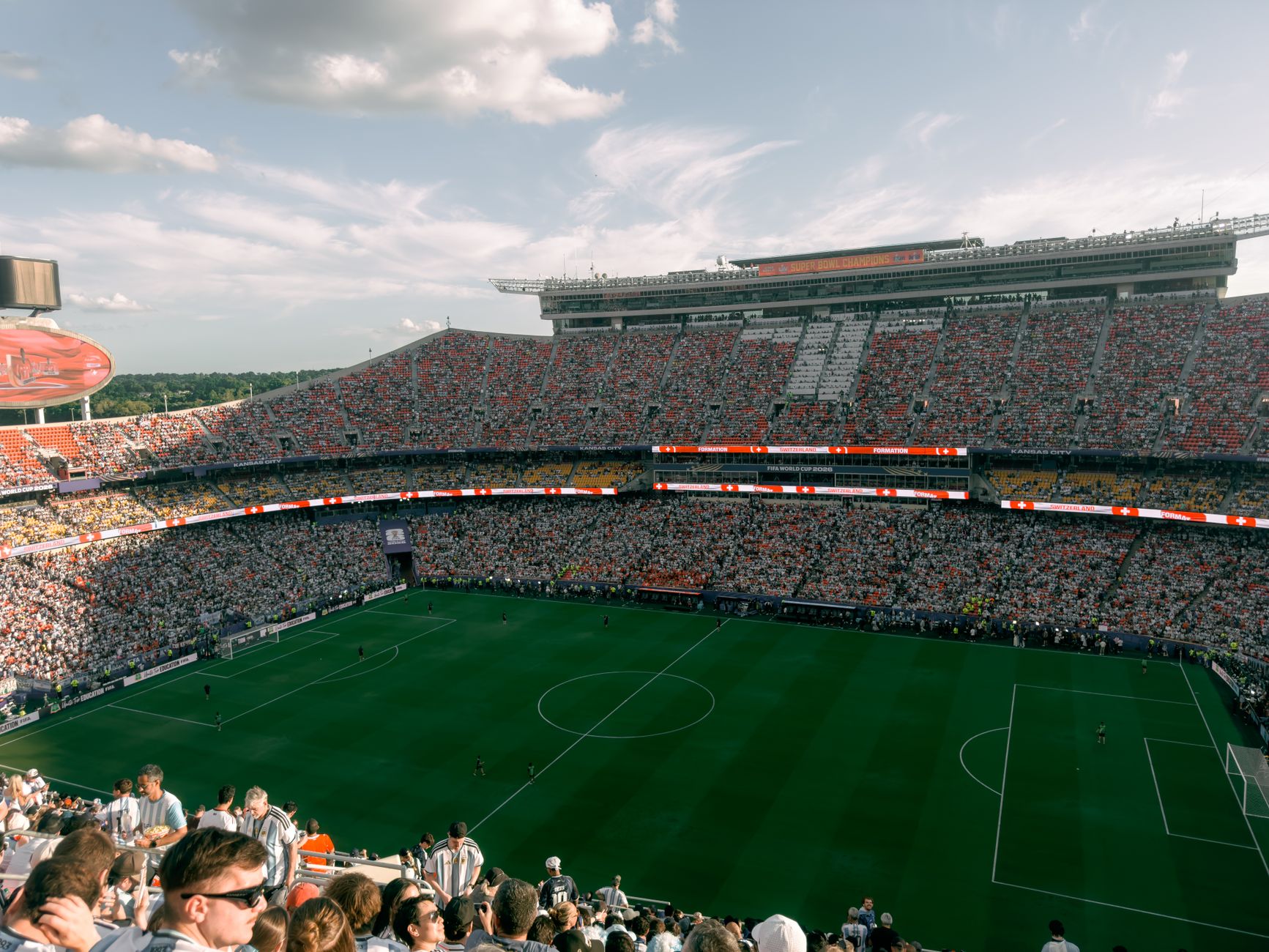
Photo by Allen Boguslavsky on Pexels
Frequently Asked Questions
Q: How many matches did Kansas City host during the 2026 World Cup?
A: Kansas City hosted six matches at GEHA Field at Arrowhead Stadium during the FIFA World Cup 2026. The allocation fell in the middle tier among the 16 Host Cities, placing it above the four-match minimum held by some venues but below the eight-plus matches allocated to larger sites like MetLife Stadium and SoFi Stadium.
Q: What was the FIFA Fan Festival in Kansas City?
A: The FIFA Fan Festival was the official public viewing and fan engagement site operated in downtown Kansas City throughout the tournament. It screened every match live, offered food and entertainment, and incorporated local cultural programming. Cumulative attendance across the tournament period reached hundreds of thousands, though per-day figures were substantially lower than the cumulative total.
Q: Why was Kansas City chosen as a 2026 World Cup Host City?
A: Kansas City met FIFA's venue and infrastructure requirements, including a stadium with capacity above 40,000, adequate hotel inventory, international airport access, and trained volunteer capacity. The bi-state coordination between Missouri and Kansas was an additional factor that demonstrated cross-jurisdictional hosting capability, which FIFA valued for the expanded tournament format.
Q: What is the Soccer Capital of America designation?
A: The "Soccer Capital of America" is a designation used by Kansas City's regional tourism and sports bodies to market the city based on its youth soccer participation rates, professional soccer history, and hosting record. The designation predates the 2026 World Cup but gained additional visibility through the Host City selection process.
Q: Where can I find official 2026 World Cup match results and statistics?
A: Official match results, group standings, and tournament statistics are available through FIFA's tournament portal. The data includes full match reports, player statistics, and venue-specific records for all 16 Host Cities including Kansas City.
Q: How does Host City performance affect future tournament bids?
A: FIFA evaluates Host City performance through post-tournament reports covering operational execution, fan engagement, infrastructure utilization, and financial management. Cities that perform well in these assessments gain a competitive advantage for future bids, both for FIFA tournaments and other international sporting events. Kansas City's 2026 performance will likely factor into its positioning for potential future events through 2030.
Q: What should bettors focus on when analyzing Host City match data?
A: Bettors should separate stadium attendance from Fan Festival attendance, adjust for venue capacity differentials across Host Cities, account for weather and pitch conditions specific to each venue, and weight venue-specific data against tournament-wide trends. Kansas City's dataset offers six matches of relatively consistent conditions — useful for venue-specific modeling but limited in statistical power compared to venues with eight or more matches.
[Internal Link: complete World Cup 2026 coverage archive]
Thank you for reading.
Pitch Notes · Editorial Archive