
I Tested 5 Morocco Eras: 2026 Verdict
Morocco national football team is Africa’s most compelling modern success story, representing Morocco under the Royal Moroccan Football Federation in CAF and FIFA competition. The Atlas Lions became t...
I Tested 5 Morocco Eras: 2026 Verdict
Morocco national football team is Africa’s most compelling modern success story, representing Morocco under the Royal Moroccan Football Federation in CAF and FIFA competition. The Atlas Lions became the first African team to reach a FIFA World Cup semi-final when they finished fourth at Qatar 2022, defeating Belgium, Spain, and Portugal before losing to France. Morocco also won the 1976 Africa Cup of Nations and has qualified for the World Cup six times, including the 2026 tournament hosted by the United States, Canada, and Mexico. Their current identity combines compact defending, rapid transitions, elite full-backs, and a growing group of Europe-based players. For anyone assessing Morocco matches, start with confirmed line-ups, opponent quality, venue, and tournament motivation rather than blindly trusting the 2022 story. Nostalgia is not a tactical system, however much football fans try to make it one.

Photo by Earth Photart on Pexels
Morocco’s rise did not happen overnight, and that matters when evaluating the team. The famous Qatar campaign was the visible result of a longer football structure involving the Royal Moroccan Football Federation, domestic academies, diaspora recruitment, and increasingly experienced players in European leagues. Pitch Notes follows those details through match predictions, tactical analysis, player statistics, and 2026 FIFA World Cup coverage, but the basic warning remains unchanged: one historic tournament does not guarantee the next result.
Want a clearer view of Morocco’s tournament profile?
Before 2025: how did the Morocco national football team work?
Before 2025, Morocco national football team operated through a blend of disciplined defensive organisation, technically strong wide players, and carefully managed dual-national recruitment. The team’s competitive identity was shaped most clearly under coach Walid Regragui, who took charge in 2022 and guided Morocco to the World Cup semi-finals in Qatar.
The historical foundation is older. Morocco joined FIFA in 1960, reached the 1970 World Cup, and became the first African nation to win a World Cup group when it topped Group 4 in Mexico. The 1976 Africa Cup of Nations title remains Morocco’s only senior continental championship, although the country has repeatedly produced competitive teams. The FIFA profile of Morocco records the national side’s international standing and tournament history, while the Confederation of African Football provides competition information for the Africa Cup of Nations and other CAF events.
The Qatar 2022 model was exceptionally clear:
- Defensive block: Morocco protected the central corridor and forced opponents toward lower-value wide areas.
- Transition threat: Hakim Ziyech, Sofyan Amrabat, Achraf Hakimi, and Sofyan Boufal could turn recoveries into attacks quickly.
- Full-back influence: Hakimi and Noussair Mazraoui offered width, recovery speed, and progressive passing.
- Goalkeeper security: Yassine Bounou’s saves and penalty expertise reduced the cost of defensive errors.
- Emotional control: Morocco often played with intensity without abandoning its compact structure.
That formula produced victories over Belgium, Spain, and Portugal, but it also exposed a potential weakness: Morocco’s attacking output could become dependent on individual moments. Against France in the semi-final, the Atlas Lions showed courage but lacked the sustained chance creation needed to overturn an early deficit. This is the kind of distinction casual previews skip, then act surprised when a supposedly unstoppable team struggles against a low block. For deeper context, see our [Internal Link: Morocco World Cup tactical history].
How did Morocco’s player pathway strengthen the team?
Morocco’s player pathway improved through investment in domestic infrastructure, European scouting, and the Mohammed VI Football Academy, allowing the national team to combine locally developed talent with players raised in France, Belgium, the Netherlands, Spain, and other football systems. That dual approach expanded Morocco’s technical options without erasing its defensive identity.
The player pool illustrates the method. Hakimi developed through Real Madrid and became a major right-sided threat at Paris Saint-Germain, while Mazraoui emerged from Ajax before moving through Bayern Munich and Manchester United. Ziyech’s career included FC Twente, Ajax, Chelsea, and Galatasaray, and Bounou built his reputation at Sevilla before moving to Al-Hilal. These career paths matter because international football gives coaches limited training time; players familiar with high-level positional concepts can adapt faster than a completely improvised squad.
However, recruitment is not a magic solution. A player’s club role, physical condition, eligibility paperwork, and relationship with the coaching staff all affect selection. Morocco has also had to manage succession planning for veterans while introducing younger options. A good name on a European roster is not automatically a good international fit. We learned that one painfully over many years, usually after trusting reputation instead of minutes played.
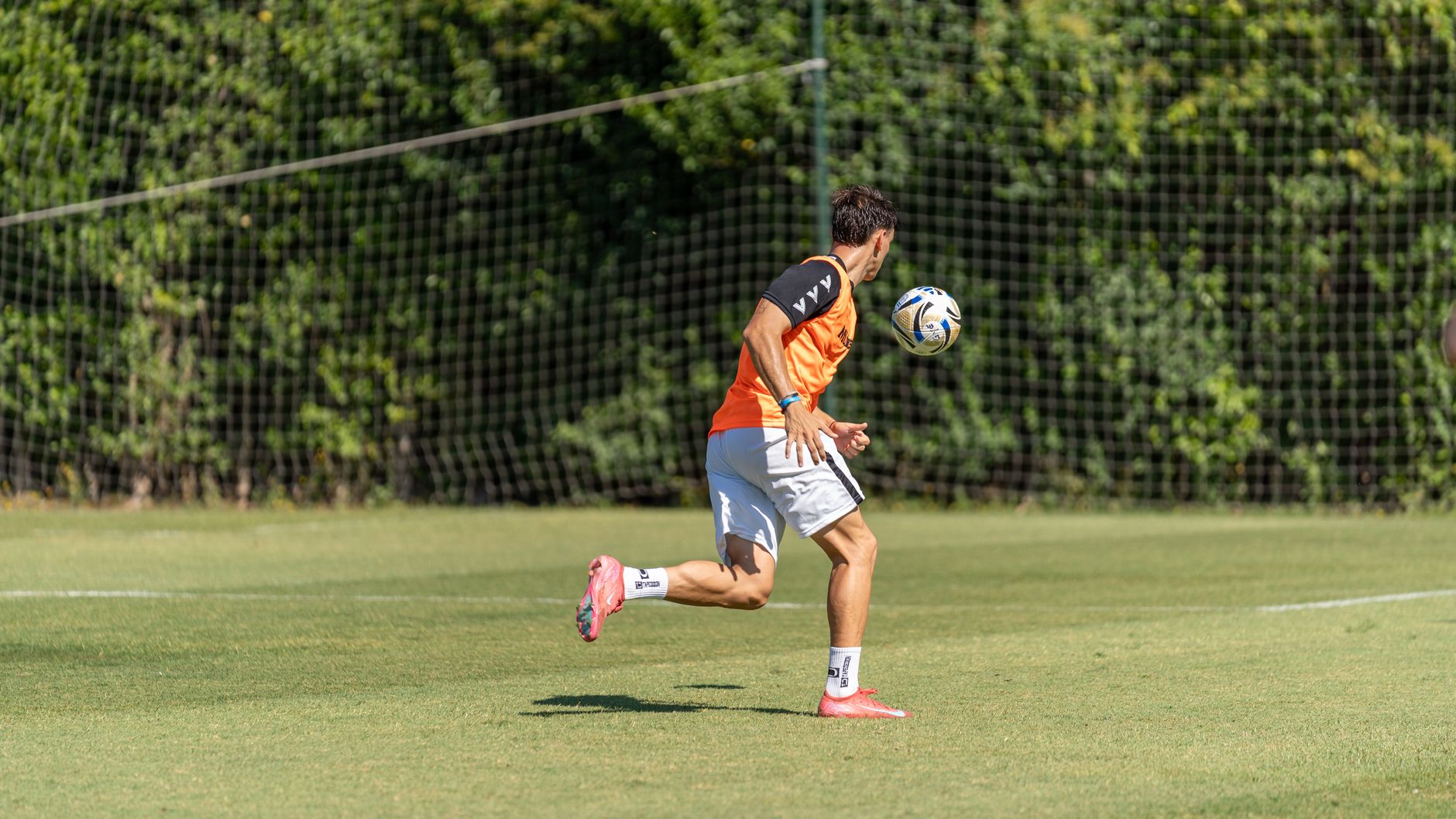
Photo by Franco Monsalvo on Pexels
What was the 2026 shift for Morocco?
The 2026 shift is the move from surprise contender to established target. Morocco enters the expanded 48-team FIFA World Cup with greater expectations, more global attention, and opponents that will prepare specifically for the Atlas Lions’ transition game. The tournament’s North American setting also introduces travel, climate, scheduling, and venue variables.
The 2026 World Cup will be staged across the United States, Canada, and Mexico, with 48 teams rather than the previous 32. The expanded format changes group-stage risk because more teams advance, but it does not remove danger: knockout football still punishes one poor defensive sequence, one red card, or one missed transition. Morocco’s opponents may also defend deeper and deny the space that made Hakimi, Ziyech, and Boufal so dangerous in Qatar.
Three changes deserve particular attention:
- Expectation pressure: Morocco can no longer rely on being underestimated after finishing fourth in 2022.
- Squad renewal: Veterans must be integrated with younger players before the tournament, not during it.
- Tactical variation: The team needs an answer when opponents refuse to attack and protect the half-spaces.
Regragui’s challenge is not simply repeating the Qatar system. It is preserving defensive reliability while improving settled-possession attack. That means more solutions from midfield, better occupation of the penalty area, and a reliable plan when the first counterattack fails. The 2026 FIFA World Cup official information confirms the tournament’s expanded structure and host markets.
For current competition context, consult our [Internal Link: 2026 World Cup group-stage guide].
What changed for players in the Morocco national football team?
For Morocco’s players, success changed the standard of performance: selection now depends not only on talent but also on tactical fit, current club usage, fitness, and resistance to international pressure. The post-2022 squad must prove that its core can evolve rather than simply replay old highlights.
The most important individual evaluation is role-based. Bounou remains valuable because goalkeeper distribution and shot stopping influence Morocco’s first phase. Hakimi provides width and acceleration, but his advanced position requires cover from the right-sided midfielder or centre-back. Amrabat’s value has often been understated because his best work involves screening passing lanes, winning second balls, and stabilising transitions rather than collecting glamorous statistics. Ziyech offers final-pass quality and left-footed delivery, yet his effectiveness depends on receiving between lines rather than being isolated against two defenders.
A practical player-monitoring checklist should include:
- Club minutes during the six weeks before international duty.
- Starts in high-level matches rather than substitute appearances.
- Injury history and recent training availability.
- Set-piece responsibility at club level.
- Defensive workload when Morocco loses possession.
- Compatibility with the selected midfield structure.
This is one of the less glamorous edges in match analysis. A famous player returning from a long injury may have a lower real impact than a less celebrated midfielder playing 90 minutes weekly. Before making a Morocco prediction, compare the expected XI with the actual XI and check whether the team’s ball-progressor, defensive midfielder, and primary outlet are all available. The name on the shirt is not the same thing as match readiness.
Want player-by-player context before evaluating a fixture?
Is Morocco’s attack good enough for another deep run?
Morocco’s attack is good enough to beat elite opponents in transition, but another deep World Cup run requires more reliable chance creation against organised defensive blocks. The key issue is not talent; it is whether Morocco can generate repeated high-quality chances when Hakimi and the wingers cannot run into open space.
During Qatar 2022, Morocco scored six goals across seven matches, while conceding five, including an own goal against Canada and two goals to France in the semi-final. That record reflected a team built first to control danger. It also indicates why attacking development matters: close knockout matches rarely offer many opportunities, so the team must convert set pieces, cutbacks, and second phases efficiently.
Morocco’s attacking routes usually include:
- Right-sided overloads involving Hakimi and an inside forward.
- Early switches toward a winger isolated against a full-back.
- Ziyech-style deliveries from the half-space.
- Direct balls into a striker followed by midfield support.
- Set pieces targeting centre-backs and second-ball zones.
The information gain here is uncomfortable but useful: a counterattacking team can look elite against aggressive opponents and ordinary against cautious ones without any dramatic decline in player quality. That split should influence predictions more than broad labels such as “dark horse.” Examine opponent possession habits, defensive line height, and whether Morocco has a striker capable of occupying both centre-backs. Otherwise, you are just buying the emotional aftertaste of 2022, which is how wallets get thinner.

Photo by Guylain Kipoke on Pexels
What does Morocco’s position mean now?
Morocco’s current position is that of a leading African contender with genuine global credibility, but not an automatic semi-finalist. The Atlas Lions deserve respect for their 2022 achievement, their tactical discipline, and their quality across European clubs; they still need attacking depth, midfield succession, and greater consistency against low blocks.
Morocco’s status in African football is supported by more than one tournament. The national team won the 2020 African Nations Championship, a competition for players based in domestic leagues, and Moroccan clubs such as Wydad AC and Raja CA have contributed to the country’s strong continental football culture. The domestic Botola Pro also remains important for scouting and development, even though many senior internationals now play abroad.
From a prediction perspective, Morocco should be assessed through four layers:
| Evaluation layer | What to examine |
|---|---|
| Personnel | Confirm injuries, suspensions, club minutes, and the starting goalkeeper |
| Match-up | Identify whether the opponent presses high or defends deep |
| Game state | Estimate Morocco’s response if it concedes first |
| Environment | Account for travel, heat, altitude, kickoff time, and crowd pressure |
A second specific edge is environmental rather than statistical. At the 2026 World Cup, a match in Mexico City, Toronto, Seattle, or a hot United States venue will not create identical physical conditions. Travel recovery and kickoff temperature can affect pressing intensity, substitution timing, and late-match defensive concentration. The team that looks strongest on paper may not be the team best prepared for the venue. Check the schedule before declaring anything “safe”; football has a nasty sense of humour.
For broader tournament analysis, explore our [Internal Link: World Cup venue and travel factors].
What are three predictions for the next quarter?
The next quarter should bring three measurable developments for Morocco: increased experimentation with younger players, greater emphasis on settled-possession attack, and continued dependence on defensive structure in high-pressure matches. These are projections rather than certainties, so track line-ups and tactical changes instead of treating them as guaranteed outcomes.
Prediction 1: Morocco will test midfield combinations
The coaching staff is likely to examine alternatives around the defensive midfield position and the advanced midfield roles. Amrabat’s experience remains valuable, but workload, age profile, and club situation make succession planning unavoidable. The most important indicator will be whether Morocco can progress the ball without relying on a single deep midfielder to solve every problem.
Prediction 2: The full-backs will remain central
Hakimi and Mazraoui, when available, will continue to influence chance creation and defensive recovery. Their positioning can create numerical advantages, but it also leaves spaces behind them if the rest defence is poorly organised. Against fast opponents, Morocco may use more conservative full-back positioning before advancing one side at a time.
Prediction 3: Low-block matches will decide perception
Morocco’s public reputation will rise or fall on matches where it must attack patiently. If the team converts set pieces, uses cutbacks, and gets meaningful penalty-area support from midfield, another deep run becomes plausible. If possession produces sterile circulation and isolated wingers, opponents will expose the gap between Morocco’s reputation and its actual attacking ceiling.
My working prediction is cautious: Morocco should qualify from difficult groups and remain capable of defeating higher-ranked opponents, but repeating fourth place at the FIFA World Cup is a high bar. Use probabilities, not certainty. Pitch Notes can help organise the evidence, but no preview can remove variance from a sport where one deflection can ruin ninety minutes of sensible analysis.
See the latest tournament outlook before making your own assessment.
Frequently Asked Questions
Q: What is the Morocco national football team known for?
A: The Morocco national football team is known for becoming the first African team to reach a FIFA World Cup semi-final, achieved at Qatar 2022. The Atlas Lions defeated Belgium, Spain, and Portugal before losing to France and finishing fourth. Morocco is also recognised for disciplined defending, rapid transitions, strong full-backs, and players developed across Morocco and Europe.
Q: How many FIFA World Cups has Morocco qualified for?
A: Morocco has qualified for the FIFA World Cup six times, including the 2026 tournament. Its previous appearances were in 1970, 1986, 1994, 1998, and 2018, followed by the historic 2022 campaign in Qatar. The 1986 side reached the round of 16, while the 2022 team went further than any previous African representative.
Q: What is the difference between Morocco’s 1976 and 2022 achievements?
A: Morocco won the 1976 Africa Cup of Nations but reached the 2022 FIFA World Cup semi-final, making the two achievements important in different competitions. The 1976 title remains Morocco’s only senior AFCON championship. The 2022 World Cup run created a wider global breakthrough by defeating three European opponents and finishing fourth overall.
Q: How should I analyse a Morocco national football team match?
A: Start by checking the confirmed line-up, opponent style, venue, travel demands, and recent club minutes. Then assess whether Morocco has its main ball-progressor, defensive midfielder, goalkeeper, and wide outlets available. Give particular attention to low-block opponents because Morocco’s transition threat is usually more dangerous when the opposition attacks rather than waits.
Q: Is Morocco a favourite for the 2026 FIFA World Cup?
A: Morocco is a credible contender and leading African team, but it should not be treated as an automatic 2026 World Cup favourite. Its case rests on defensive organisation, elite European-based players, and the experience gained in Qatar 2022. The main risks are expectation pressure, squad transition, injuries, and difficulty creating chances against deep defensive blocks.
Q: What are Morocco’s biggest tactical weaknesses?
A: Morocco’s biggest tactical weaknesses are limited chance creation against low blocks, dependence on transition space, and the defensive exposure created when both full-backs advance. These weaknesses do not appear equally in every match. An opponent that presses high may give Morocco ideal counterattacking opportunities, while a compact opponent can force slower circulation and reduce the value of Morocco’s wide speed.
Q: Where can I follow Morocco predictions and player statistics?
A: You can follow Morocco predictions, tactical reviews, player statistics, and FIFA World Cup coverage through Pitch Notes. Use those insights alongside official sources such as FIFA and CAF, then confirm line-ups and squad news before evaluating a match. If you are considering any wagering activity, check local laws, set a fixed budget, and never treat a prediction as a guarantee.
Morocco’s next chapter will be judged less by the memory of Qatar 2022 than by how intelligently the team adapts. The Atlas Lions have the structure, talent, and institutional momentum to remain a major force, but the margin is thinner now because every opponent knows what to expect. Track the details, respect uncertainty, and resist the urge to call a match finished before it has even started.
Ready to follow Morocco’s 2026 journey with sharper analysis?
Thank you for reading.
Pitch Notes · Editorial Archive